

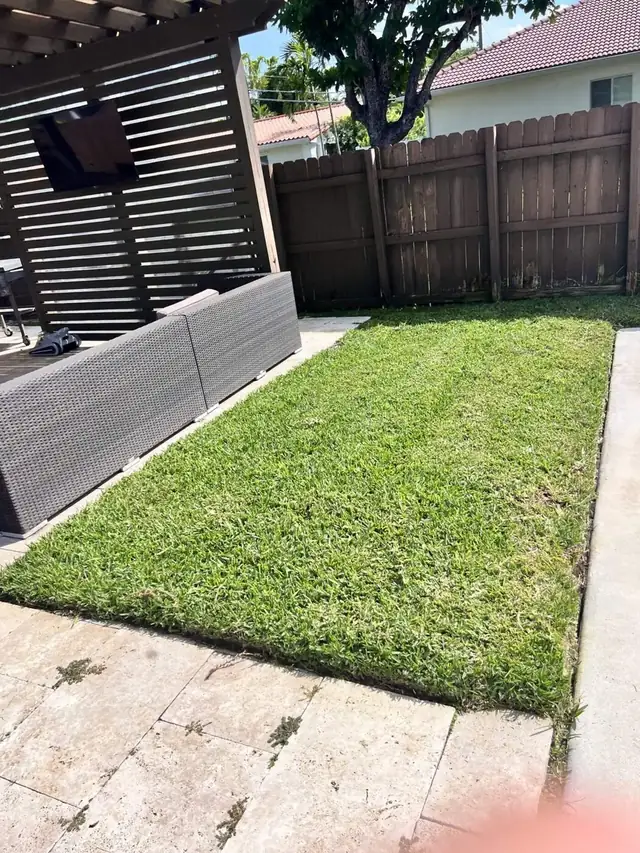
A brown patch that keeps spreading is frustrating, and the worst move is to throw new sod on it before you know why the old grass died. Lovescape starts by finding the cause, then repairs the lawn in the way that actually holds: patching, partial replacement, or a full re-sod.
Why Cutler Bay lawns die: the four causes we check first
Different problems look alike from the driveway, and each needs a different fix. We look for these first:
- Chinch bugs. The main insect pest of St. Augustine. They cause yellow-to-brown patches, usually starting in hot, sunny, stressed turf along driveways and sidewalks. The patches grow quickly in the heat of summer.
- Fungus and root disease. Gray leaf spot and take-all root rot show up in the wet season. Take-all is often already well advanced by the time you see it.
- Water problems. Drought stress, gaps in sprinkler coverage, or the opposite, soggy low spots that never dry out. Drainage may be the real culprit.
- Shade, compaction and poor soil. A tree that grew in, a path that gets walked on, or limestone soil that has stripped the iron out of the grass.
This is why we say the same thing to every customer: the cause comes before the cure. Treating the wrong problem is how people end up paying for sod twice.
Patch, partial replacement, or start over?
| Situation | Usual fix |
|---|---|
| A few small bare spots, healthy lawn around them | Patch with new sod and fix the cause. |
| One damaged section, such as along a driveway or under a tree | Remove the section and re-sod it, then address why it failed. |
| Weeds or torpedograss have taken over most of the lawn | Kill out and replace the whole lawn. A spray will not rescue it. |
| Lawn is thin everywhere but not dead | Fix the soil, watering and mowing first, then patch what does not recover. |
We assess the soil and turf damage first, remove dead or damaged grass where needed, treat the soil, and then bring in fresh turf. When we are done we give you guidance on how to keep it healthy.
Choosing the right grass
Most Cutler Bay lawns are St. Augustine, and the variety matters. Floratam is the most widely planted and does best in full sun. Palmetto handles partial shade better. Newer varieties such as CitraBlue are bred for better drought and disease tolerance. Zoysia, Bahia and Bermuda are alternatives with different looks and upkeep. We will tell you what suits your sun, soil and how much work you want to put in.
One point of confusion is worth clearing up. This page is about real, natural sod. If you have been searching for artificial turf, that is a different product, and not what we install.
How we install sod on Miami limestone soil
Prepare
Remove the dead grass, loosen the soil, grade it so water runs off, and level it. Rock-filled Miami soil needs real prep, because sod laid on hard, uneven ground roots poorly.
Lay
Fresh sod goes down in a staggered, brick-like pattern with tight seams, and is rolled so the roots contact the soil.
Water
New sod needs water right away and daily during establishment. We go over the schedule with you before we leave.
New sod and the Miami-Dade rules
Two local rules apply to a new lawn, and both catch homeowners off guard.
- Watering. Miami-Dade allows new landscaping to be watered every day except Friday for the first 90 days, during the normal allowed hours (before 10 a.m. or after 4 p.m.). Keep your sod receipt, since it shows the install date.
- No fertilizer for 60 days. The County’s fertilizer ordinance bars fertilizer for the first 60 days after sodding, and nitrogen or phosphorus fertilizer is banned countywide from May 15 through October 31.
What sod installation costs in Miami
A published South Florida guide from Floridist puts the sod itself at roughly $0.40 to $0.85 per square foot for St. Augustine, and installed prices on prepared ground at about $1.00 to $2.50 per square foot. A full replacement that includes removing the old lawn and grading can run higher. A pallet covers about 450 to 500 square feet.
Your number depends on the size of the area, the grass you choose, the condition of the old lawn, and access to the yard. We measure and give you a free written estimate before starting.
What Cutler Bay Homeowners Say
Lawn restoration in Cutler Bay and Palmetto Bay
Lawns on the east side of Cutler Bay near Biscayne Bay and Black Point Park & Marina deal with more salt and wind, while canal-side and lake-side lots, like those in Lakes by the Bay, have to follow the County’s 20-foot rule that keeps nitrogen and phosphorus fertilizer away from water. We work all over Cutler Bay, Palmetto Bay, Pinecrest and Kendall.
Sod and Lawn Restoration Questions
In many cases, yes. Patchy or thinning lawns are usually a soil, watering or pest problem rather than a reason to start over. We assess the cause before recommending a fix, and we will tell you if replacing a section makes more sense.
Sod needs clean, loosened, level soil to root properly. Laying it over dead grass, compacted soil or loose rock leads to poor rooting and patches that fail again.
Yes, during establishment. Miami-Dade allows new landscaping to be watered every day except Friday for the first 90 days, during the standard hours before 10 a.m. or after 4 p.m.
Not for the first 60 days. Miami-Dade bars fertilizer for 60 days after sodding, and bans nitrogen or phosphorus fertilizer across the county from May 15 through October 31.
Common causes are chinch bugs, take-all root rot, drought, over-watering and shade. Each needs a different fix, which is why we diagnose before we repair.
You will usually see visible improvement within a few weeks, with a fully restored lawn over one to two growing cycles, depending on how much damage there was.
No. This page is about natural sod and lawn repair. We do not install artificial turf.


 Get a Free Quote