
Mulch Installation in Cutler Bay, FL
- Home
- Landscaping
- Mulch Installation

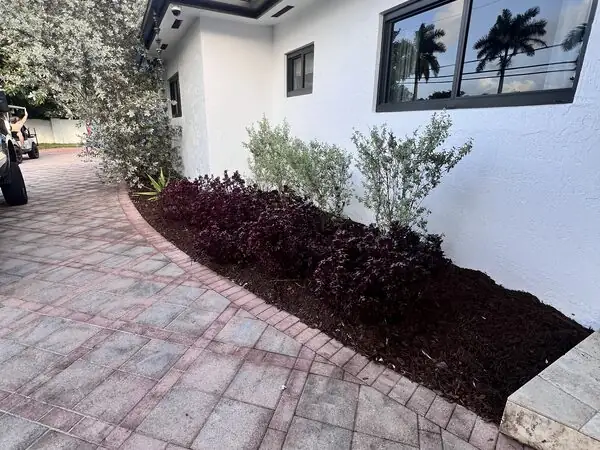
Mulch looks simple, and that is why it is so often done wrong. Piled against a trunk, laid too thick or spread over old, matted mulch, it can hurt the plants it is meant to protect. Lovescape clears the old mulch, spreads fresh mulch at the right depth, keeps it off your trunks and walls, and edges the beds so they stay sharp.
What we do on a mulch job
- Removal of old, faded or weed-choked mulch
- Fresh mulch delivered and installed at the right depth
- Clean edging along beds, borders and tree rings
- Debris hauled away, no mess left behind
The right depth, and why mulch stays off the trunk
University of Florida guidance is to keep a 2 to 3 inch layer around established trees, shrubs and bedding plants. Thicker than that, and mulch can hold too much moisture and starve roots of air. Just as important is where it goes. Piling mulch against a trunk, often called volcano mulching, holds moisture against the bark and encourages rot.
Around large trees and plants, mulch should stop about a foot from the base. Around smaller plants, leave a couple of inches bare. Along the house, pull it back from the wall so the foundation stays visible.
Which mulch is right for a South Florida yard
Not all mulch behaves the same in Miami rain and heat. The University of Florida’s Florida-Friendly Landscaping program points to a few good choices and one to avoid:
- Melaleuca: made from an invasive tree, and it settles very slowly, so it lasts.
- Eucalyptus: grown specifically to be made into mulch.
- Pine bark and pine straw: good organic options, and pine straw is light on a slope.
- Cypress: the program does not recommend it, because it is often harvested from wetlands.
- Dyed red or brown mulch: a popular choice for curb appeal. The color fades over a season or two.
Tell us whether you care more about looks, longevity or budget, and we will recommend a mulch that fits the bed.
Does mulch cause termites?
This is the most common worry we hear. No mulch is termite-proof, and a thick layer of mulch against the house can hide the foundation, which makes a problem harder to spot. That is why we keep mulch pulled back from the wall and do not pile it deep along the foundation. If you have had termites before, it is worth asking your pest control company about mulch near the house.
Landscape fabric and weeds
Many homeowners are told landscape fabric stops weeds. In practice, seeds blow in and sprout in the mulch on top, and hardy weeds like nutsedge can grow right through the fabric. A thicker, coarser layer of mulch and clean edges do more than fabric does. In beds that already have heavy weeds, we remove them before laying the new mulch, so you are not covering up a problem. If your weeds are in the lawn, see weed control.
How much mulch do you need?
One cubic yard of mulch covers about 108 square feet at a depth of 3 inches. Use this as a rough guide:
| Bed area | Mulch needed at 3 inches |
|---|---|
| 100 sq ft (a small bed) | about 1 cubic yard |
| 200 sq ft | about 2 cubic yards |
| 400 sq ft (several beds and tree rings) | about 4 cubic yards |
| 800 sq ft (a larger yard) | about 7 to 8 cubic yards |
We measure on site, so you do not have to guess and you do not end up with a pile left in the driveway.
When to refresh mulch in South Florida
Heavy rain and strong sun break mulch down faster here than in cooler climates. Most properties need fresh mulch once or twice a year. A good time to refresh is before the rainy season starts, so your beds go into the wet months with a full layer.
What affects the price
- Bed size and how much old mulch has to be removed.
- The type of mulch you choose.
- Depth, since a deeper layer takes more material.
- Access. A bed behind a gate takes longer than one at the curb.
We give a free, no-obligation estimate before any work starts.
What Cutler Bay Homeowners Say
Mulch installation around Cutler Bay and Palmetto Bay
Yards near Old Cutler Road often have mature trees with wide root zones and tree rings that need the right mulch clearance. Lakefront and canal-side lots in neighborhoods like Lakes by the Bay see washouts in heavy rain, which is where a coarser, slower-settling mulch earns its keep. We serve Cutler Bay, Palmetto Bay, Pinecrest and Kendall.
Mulch Installation Questions
University of Florida guidance is 2 to 3 inches around established trees and shrubs, and about 1 inch around seedlings. Keep it away from trunks, about a foot from the base of larger plants.
Most Cutler Bay properties need fresh mulch once or twice a year. Heavy rain and sun break mulch down faster here than in cooler climates.
We install mulch suited to South Florida beds. Melaleuca, eucalyptus and pine bark are good options, and we can talk you through the choices for your yard.
No mulch is termite-proof, and a thick layer against the house can hide the foundation. We keep mulch pulled back from the wall, and it is worth asking your pest control company if you have had termites before.
Yes. Old mulch is cleared out before fresh mulch goes down, so you get a clean, even finish instead of layering on top of decomposed material.
Usually not. Weeds seed in on top of the fabric, and some grow through it. A coarse, properly deep layer of mulch with clean edges does more.
One cubic yard covers about 108 square feet at 3 inches deep. We measure on site and bring the right amount.


 Get a Free Quote