

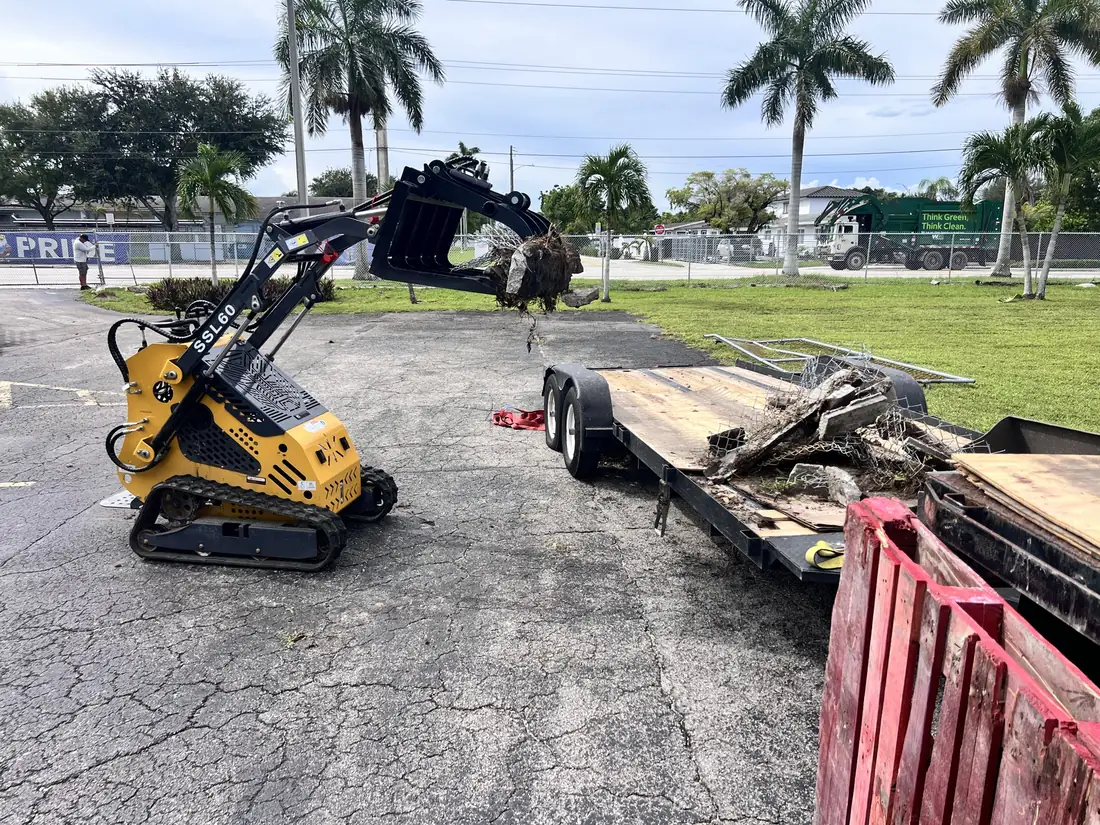
Usually yes, if the tree counts as protected. In Cutler Bay and Palmetto Bay, tree removal permits come from Miami-Dade County, and trimming done to the proper standard does not need one. The catch is knowing which trees are protected, so check with the County before anyone touches a saw.
What is the short answer for a Cutler Bay or Palmetto Bay homeowner?
Miami-Dade requires a tree removal or relocation permit for any tree that is not specifically exempt under the County's Environmental Code. Neither the Town of Cutler Bay nor the Village of Palmetto Bay runs its own permit program, and both point residents to Miami-Dade for removals. So the County is the office to call, at 305-372-6574.
Some cities in the County do have their own tree ordinance, and in those the city is the first call. The County lists Coral Gables, Homestead, Miami, Miami Beach, Miami Gardens, Miami Lakes, Miami Springs, North Miami, North Miami Beach, Pinecrest and South Miami. Cutler Bay and Palmetto Bay are not on that list at the time of writing, so confirm before you plan around it.
Pruning to the ANSI A-300 standard needs no permit. Removing a protected tree does. Topping a tree can be treated as destroying it. If you are not sure, a phone call to the County costs nothing and a violation costs a lot more.
Which trees are protected, and which are not?
The County defines a tree as a woody plant with a trunk at least 3 inches across, or one that stands 12 feet or taller. A specimen tree has a trunk 18 inches or more across, measured at 4.5 feet above the ground. That is about 56.5 inches around.
The County says these are not counted as specimen trees: non-native fruit trees grown for fruit (mango, avocado and citrus), non-native Ficus, and multi-trunk palms. Whether a given tree needs a permit still depends on the exemptions in Section 24-49(4) of the County Code, which has more conditions than a short list can capture. Treat this page as a map, not a ruling.
| Situation | What to do first |
|---|---|
| Tree on your single-family lot, trunk under 18 inches | Ask the County whether it is exempt. Many are, but the exemption has conditions. |
| Specimen tree (18 inches or more across) | Expect to need a permit. Do not remove anything before you have it. |
| Tree in the swale or street right-of-way | Not yours to remove or prune on your own. Contact the Town or the Village first. |
| Mangroves or wetland trees | Separate County offices handle these (Coastal Resources 305-372-6575, Wetland Resources 305-372-6585). |
| 10 or more trees | The County may require a site plan or tree survey. |
Do you need a permit to trim a tree?
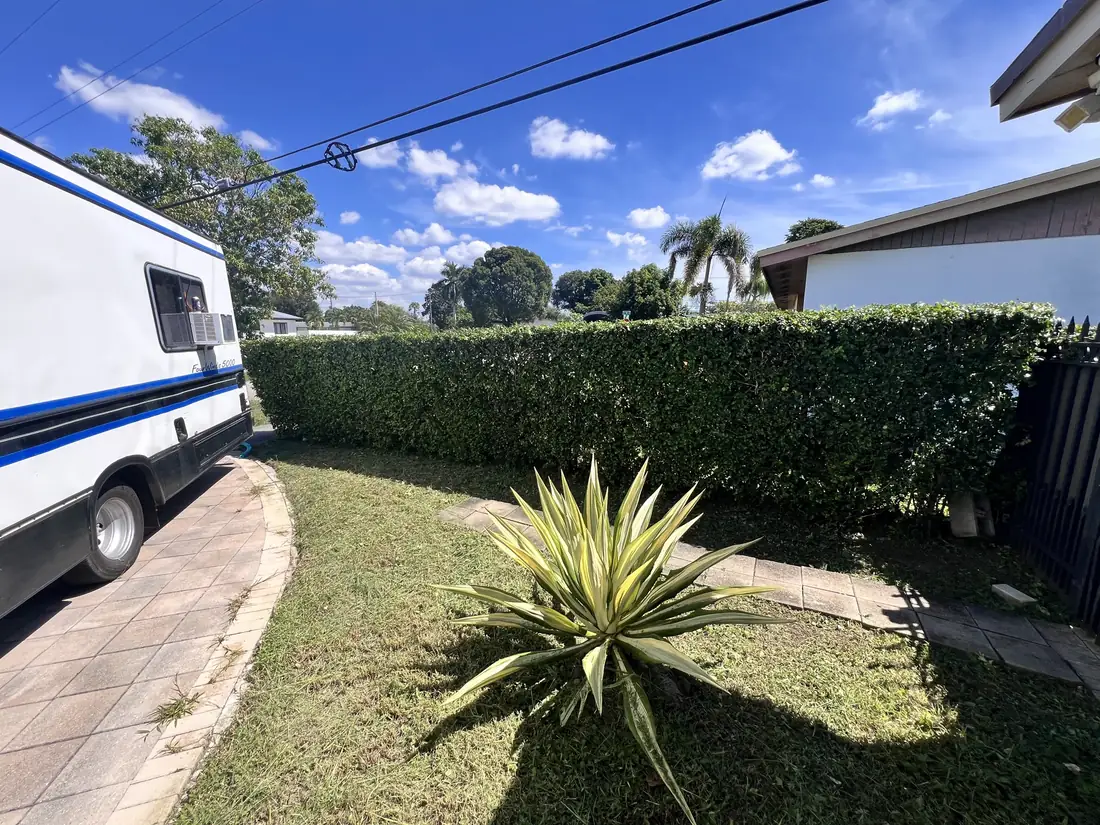
No, as long as the pruning follows the current ANSI A-300 standard for tree care. The County is clear that improper pruning is a different story: hat-racking, topping and lion-tailing can be treated as effectively destroying the tree, and that can count as a violation.
That matters because the most common mistake is hiring someone cheap to "cut it way back." A tree cut that hard can end up needing the permit it never got. Our tree trimming and removal page explains how we decide between a trim and a takedown.
- Proper pruning removes dead, crossing or hazardous limbs and keeps the natural shape. Our hedge and bush trimming work follows the same no-hard-cuts approach.
- The Town of Cutler Bay asks that no more than 25 percent of the canopy be removed.
- Keep 13 feet of clearance over streets and 8 feet over sidewalks, according to the Town.
Who is responsible for the tree in the swale?
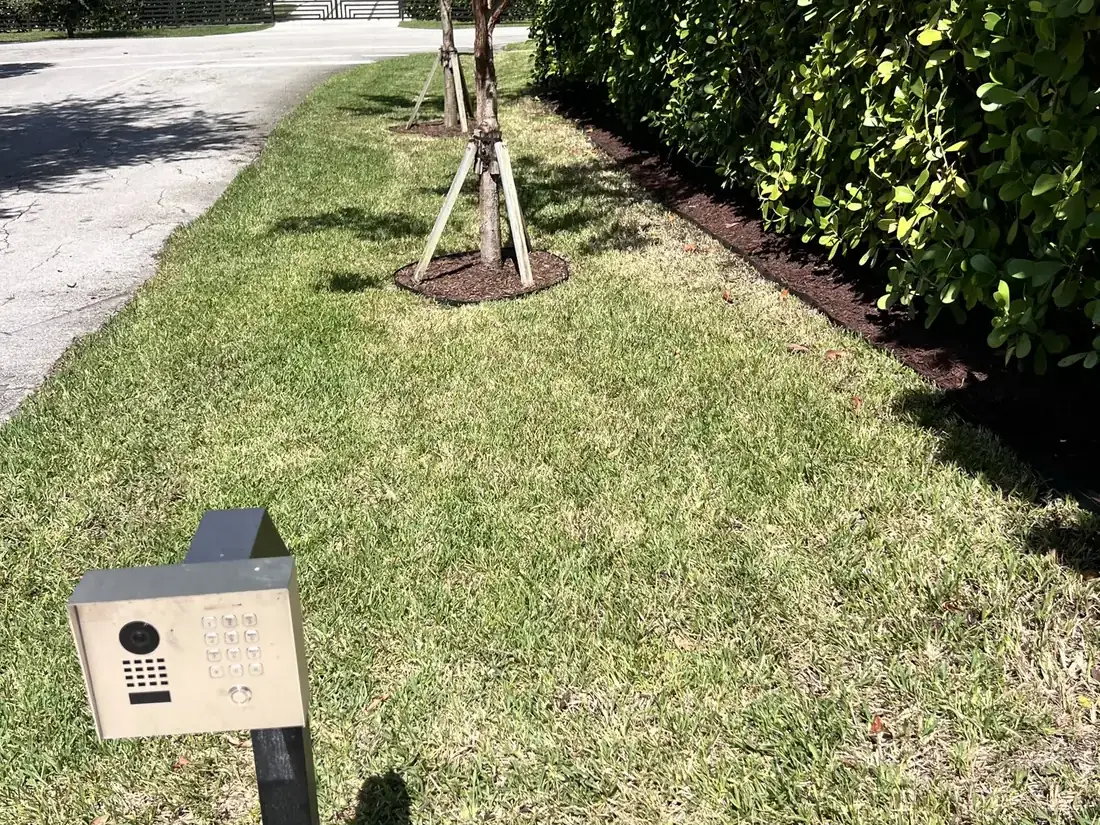
The Town of Cutler Bay says residents are expected to maintain swale trees, including keeping those clearances, and to deal with dead or dangerous limbs. That does not mean you can take the tree out. The County says not to improperly prune, damage or remove a tree in a city-owned right-of-way, including street swales, without approval from the local government.
The practical rule: maintain it, ask before you remove it. If the tree is near power lines, call FPL, not a landscaper.
How does the permit process work, and how long does it take?
Confirm you need one
Call the County Tree Program at 305-372-6574 and describe the tree, its size and where it stands.
Apply online
Submit the application form and the initial fee through the County's online portal. Fees are set by the County and are not refundable if the application is withdrawn or denied.
Wait about 21 days
The County says processing, from accepted application to issued permit, takes about 21 days. If they ask for more information and you do not respond within 120 days, the application is denied.
Do the work, then close the permit
A permit is good for one year. Afterward you request a final inspection so the County can close it, and replanting conditions may apply.
What happens if a tree comes down without a permit?
You can be required to apply for an after-the-fact permit, which the County says costs double the normal fees. Further enforcement, including a civil violation notice with a penalty, can follow. It is much simpler to ask first.
If a tree is an immediate hazard, call the County anyway and describe the situation. We will tell you plainly what we can and cannot do before any work starts, and a protected tree should never come down before the permit is in hand.
What about stump grinding and cleanup after the tree is gone?
Once a tree is legally down, stump grinding and hauling the debris away are separate steps, and we handle both. After a storm, our storm cleanup page covers what to do with fallen trees and limbs. Opening up the space also lets us regrade or mulch the area. Replanting in the same spot is a good moment to think about the right tree in the right place, which our native planting and custom landscape design pages cover.
See the full tree service overview, or contact us and we will walk the yard with you.
Questions homeowners ask
Not automatically, but do not assume. Ask the County Tree Program at 305-372-6574, because a dead tree can still be protected, for example a specimen tree.
The Town sends residents to Miami-Dade County for removal permits. Call Town Public Works at 305-234-4262 if you are unsure about a swale tree.
Multi-trunk palms are not counted as specimen trees under the County definition, but the rules for palms have details. Ask the County before removing a large palm, and do not give it a hurricane cut, which does more harm than good.
The application is the property owner's to submit, or an authorized representative's. We will tell you whether your tree looks like it needs one and what to bring to the County.
Plan on the County's roughly 21 days for processing, plus scheduling the work. If you need a permit, start early.
Call FPL at 1-800-468-8243. Do not trim near power lines yourself or hire a crew that is not set up for it.
Request a free estimate or call 305-515-0985.


 Get a Free Quote